
Marketing
Your Business Is Getting Attention, So Why Aren’t People Buying?
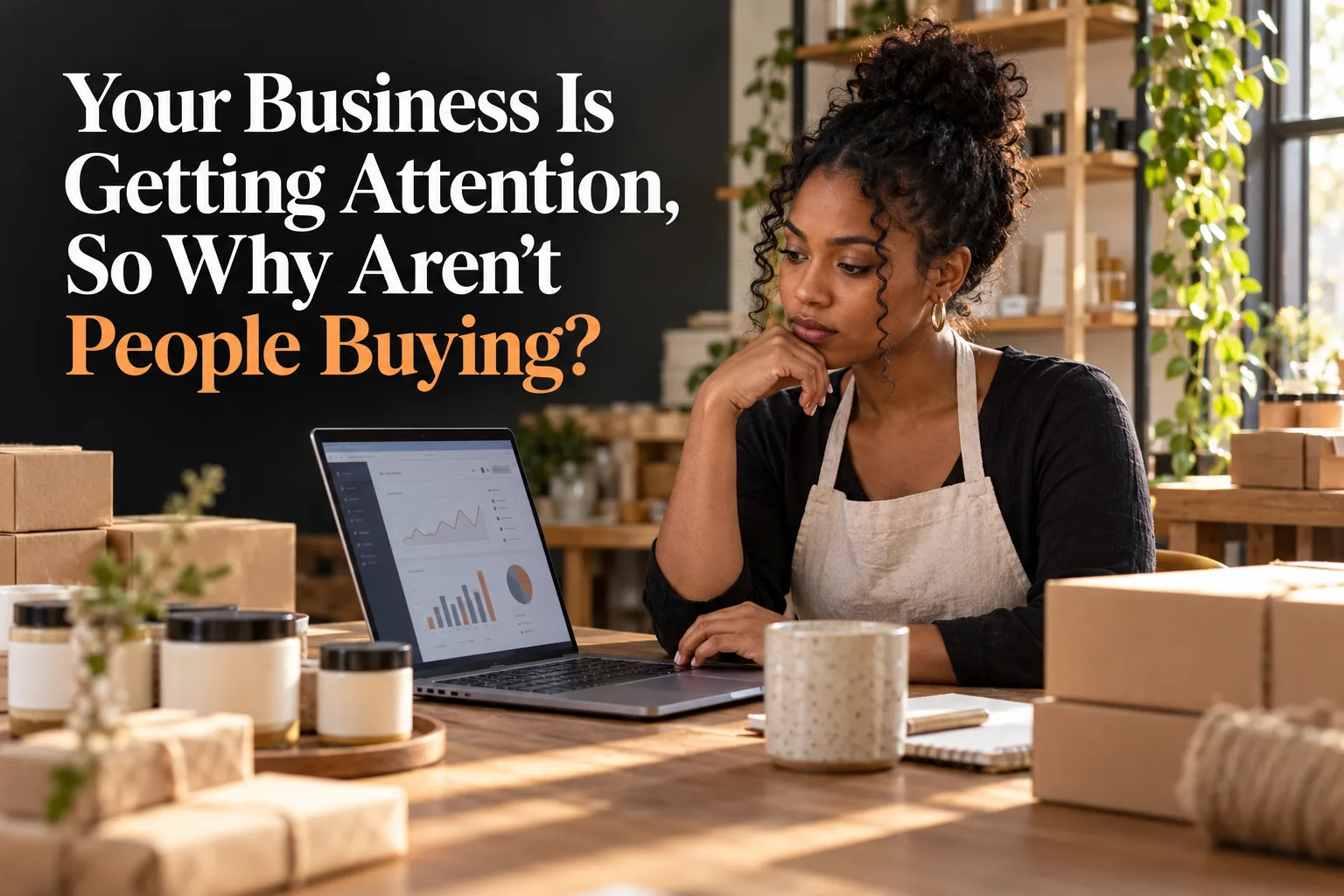
The likes are growing. People are visiting your page. Yet the orders aren’t coming in. It’s frustrating when your business gets noticed but sales stay quiet. The gap could be an unclear offer, unanswered questions or a buying process that feels like hard work. Before chasing more attention, take a closer look at what happens after someone becomes interested.
Make yourself comfortable.
Your Business Is Getting Attention, So Why Aren’t People Buying?
Let’s be honest. It can be frustrating to post beautiful pictures of your products, write thoughtful captions, and watch people view your content without making a single purchase.
You see the likes. You notice the comments. Sometimes, people even send messages asking about your prices. You get excited, thinking a sale is coming, only for the conversation to end with, “Okay, I’ll get back to you.”
And they never do.
If this sounds familiar, take a breath. Your business may not have a visibility problem. It may have a marketing problem.
Because getting people to notice your business and giving them a reason to buy from you are two very different things.
People Can Like Your Content Without Wanting Your Product
Here’s something every business owner needs to understand: attention doesn’t always translate into sales.
Someone might like your product photo because it looks beautiful. Another person might share your post because they find it interesting. Neither action necessarily means they’re ready to buy.
The real question is this: Does your marketing help people understand why they need what you’re offering?
Imagine you sell handmade bags. You post a lovely picture of one with the caption:
“Available for sale. Send a DM to order.”
That’s fine, but it doesn’t tell a potential customer much.
What makes the bag special? Is it spacious enough for everyday essentials? Is it durable? Does it complement different outfits? What makes it worth the price?
Your customers shouldn’t have to work too hard to understand the value of your product.
Good marketing doesn’t just display what you’re selling. It helps people see why it matters to them.
Are You Selling a Product or Solving a Problem?
People don’t always buy products simply because those products exist. Often, they buy because they want a particular result, experience, or feeling.
Someone buying a handbag might want convenience, durability, or a stylish accessory that works for different occasions. Someone paying for a professional service might be looking for reliability, peace of mind, or a solution to a problem they cannot handle alone.
Understanding what your customers value changes the way you market your business.
Instead of repeatedly telling people that your product is available, show them how it fits into their lives.
If you sell skincare products, explain what each product is designed to do, how to use it, and what customers should realistically expect. If you offer graphic design services, demonstrate how clear, professional visuals can help a business communicate its value.
The goal isn’t to exaggerate what you offer. It’s to communicate its genuine benefits clearly.
When people understand the value of something, they have a better reason to consider buying it.
Your Customers May Be Interested, but Something Is Holding Them Back
Let’s return to those people who ask for your prices and disappear.
It’s tempting to assume they’re not serious buyers. Sometimes, that’s true. But there may be other reasons they’re hesitating.
Perhaps your prices aren’t clearly explained. Maybe they don’t understand what they’re getting for the money. They might have questions about delivery, payment, product quality, or how your service works.
And sometimes, they simply aren’t ready to purchase.
This is why customer communication matters.
When someone asks about your product, don’t treat the conversation as a transaction that begins and ends with stating the price.
Answer their questions. Explain the options available. Make the ordering process clear. Where appropriate, ask what they’re looking for so you can recommend a suitable option.
You don’t need to pressure anyone into buying.
You need to make it easier for interested customers to make informed decisions.
And remember, not every enquiry will become a sale. The goal is to understand what customers need, remove avoidable confusion, and build trust.
Stop Posting Just to Keep Your Business Active
Consistency matters in marketing, but consistency without purpose can become a routine that produces very little.
If every post says, “Buy now,” “Order today,” or “Available in different colours,” your audience may eventually stop paying attention.
Your customers need more than repeated reminders that your business exists.
Give them reasons to engage with you.
Share answers to frequently asked questions. Demonstrate how your products work. Explain common mistakes your customers can avoid. Introduce the people behind your business. Share genuine customer feedback with permission. Show the care that goes into your work.
And, of course, tell people how to buy from you when they’re ready.
A good marketing strategy balances visibility, education, trust, and sales. Each piece of content should serve a purpose rather than simply fill space on your page.
You don’t have to turn every post into a sales pitch to make your marketing effective.
Sometimes, helping people understand a problem is what makes them remember your business when they are ready to buy.
Your Brand Must Give People a Reason to Trust You
Imagine discovering a business online. Its page looks professional, the products are attractive, and the prices seem reasonable. But when you ask a question, nobody responds for three days. The information on the page is confusing, and you cannot tell how orders are delivered.
Would you feel comfortable sending your money?
For many customers, the answer would be no.
Trust is built through the entire customer experience, not just attractive branding.
Clear information, responsive communication, realistic promises, consistent product quality, and reliable service all influence how people perceive a business.
You don’t need the biggest advertising budget to begin building trust. You need to be intentional about the promises you make and the experience you provide.
And if something goes wrong, how you handle the situation matters too.
People may discover your business because of a beautiful advertisement, but their experience can influence whether they return or recommend you to someone else.
Before You Spend More Money on Marketing, Ask Yourself These Five Questions
If your business is attracting attention but struggling to convert that attention into sales, don’t immediately assume you need to spend more money on advertising.
Start by reviewing what you’re already doing.
Ask yourself:
Am I reaching the right people?
A large audience means little if most of its members have no interest in what I offer.Is my value clear?
Can a potential customer quickly understand what I sell, who it is for, and why it might be useful?Am I building trust?
Does my business provide clear information, credible evidence, and a reassuring customer experience?Is buying from me easy?
Can customers understand the prices, payment options, ordering process, and delivery arrangements?Am I learning from my results?
Do I know which posts, enquiries, and marketing activities lead to meaningful customer actions?
Your answers can help you identify where your marketing needs attention before you commit additional resources.
You may discover that the problem isn’t a lack of advertising. It could be unclear messaging, poor customer follow-up, an inconvenient buying process, or a mismatch between your offer and your audience.
The important thing is to investigate rather than guess.
The Real Goal Is More Than Getting Noticed
Every business wants attention. But attention alone cannot sustain a business.
What matters is what happens after someone discovers you.
Do they understand your offer? Do they trust your business? Can they see the value? Do they know what to do next?
These are the questions that turn marketing from a series of social media posts into a more thoughtful business strategy.
You don’t need to be everywhere at once. You don’t need to copy every successful business you see online. And you don’t need to chase every new marketing trend.
You need to understand your customers, communicate your value, deliver on your promises, and pay attention to what your results are telling you.
Because the purpose of marketing isn’t simply to make people look at your business.
It’s to help the right people recognise its value and make it easier for them to choose you.
A Question for Business Owners
If people are viewing your products, liking your posts, and asking questions but rarely buying, what do you think is stopping them?
Before spending more money trying to attract attention, take a closer look at what happens after you get it.
Your next sale may depend on it.