
Tech news
Elon Musk’s Flying Tesla Roadster: What’s Real and What Comes Next?
Tesla’s latest Roadster demonstration has put the flying-car dream back in the headlines. Here’s what the prototype showed, how the different versions compare and what remains uncertain before production. For years, the flying car has been the machine we were always supposed to have by now. We got electric vehicles, navigation apps and cars that help with parking. Taking off from the ground still belonged mostly to the movies.
Make yourself comfortable.
For years, the flying car has been the machine we were always supposed to have by now. We got electric vehicles, navigation apps and cars that help with parking. Taking off from the ground still belonged mostly to the movies.
Now, Elon Musk has given people another reason to look up.
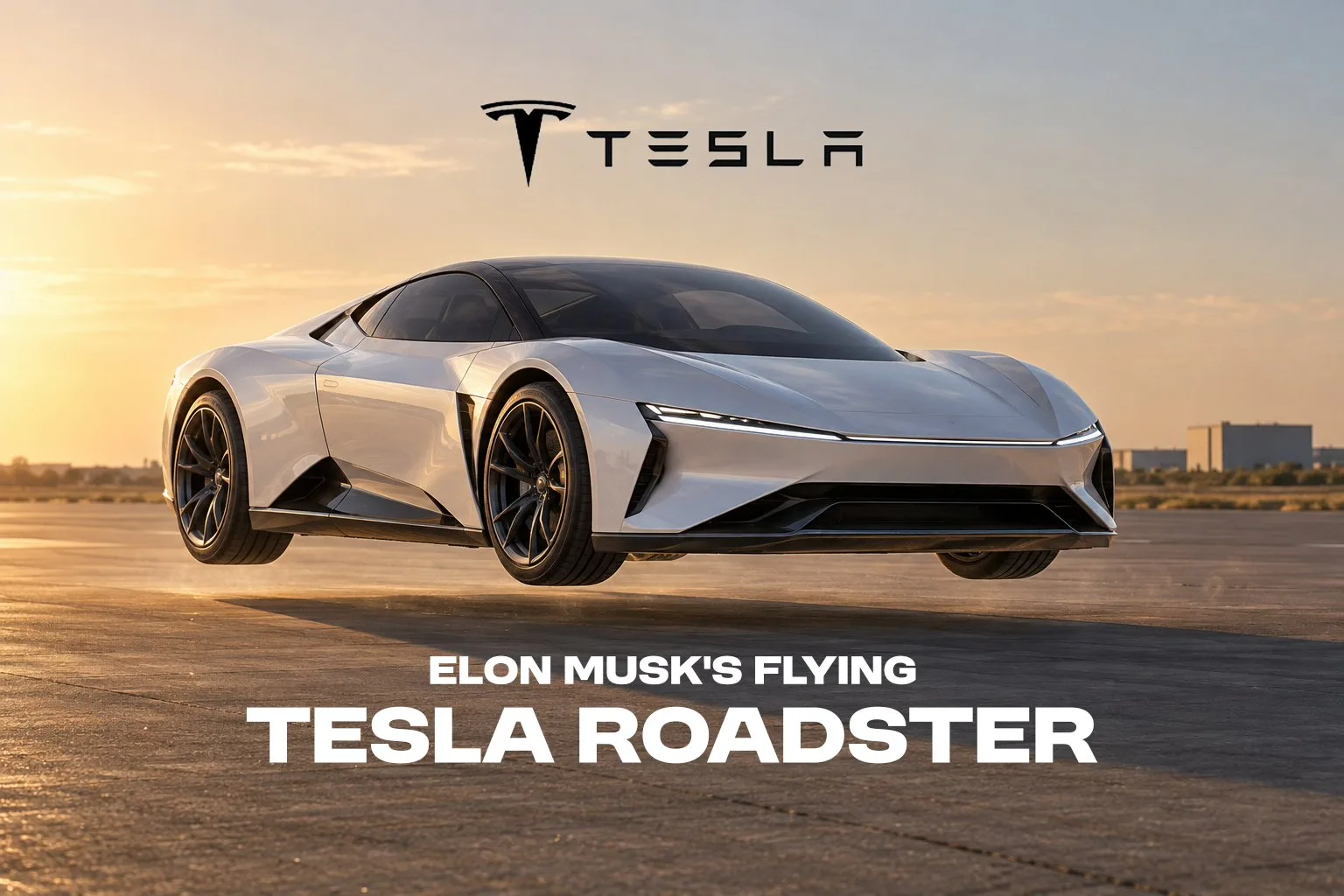
On 15 October 2026, Tesla unveiled a redesigned Roadster in a demonstration involving SpaceX-developed thrusters. Reuters reported that the prototype travelled upside down on a ramp, turned in the air and landed with help from its built-in thrusters. Musk said production was planned for 2028. Reuters report.
It is an extraordinary image: a sports car doing something we usually associate with aircraft. But the useful question is what that demonstration tells us about a vehicle people might eventually own.
What Is Tesla’s “Flying Car”?
The vehicle is the Tesla Roadster, an electric sports car. You may also have seen it written as “Roadstar,” but Roadster is the correct name.
This latest reveal follows the next-generation Roadster Tesla first presented nearly nine years earlier. Reuters describes the new project as a collaboration between Tesla and SpaceX. Reuters.
Calling it a flying car is understandable when the vehicle visibly leaves the ground. Yet a controlled airborne manoeuvre does not establish that a car can make sustained journeys through the sky.
For readers imagining a shortcut over morning traffic, that distinction matters. A spectacular test demonstration and a dependable aerial commute are very different milestones.
How Does the Roadster Get Off the Ground?
Car and Driver reports that the thrusters use highly pressurised air rather than conventional rocket fuel. Its coverage also describes a fan system used to generate suction beneath the car. Car and Driver’s reveal coverage.
Think of them as different jobs: one system helps the vehicle grip a surface; the thrusters provide additional force.
That still leaves practical questions. How often can the system perform? How does it behave in changing conditions? What does regular maintenance involve?
Those details matter far more to ownership than a short demonstration can establish.
Not Every Roadster Version Is the Flying Version
Car and Driver describes three configurations with different equipment:
ConfigurationReported distinctionPerformanceActive aerodynamics and a fan systemThrustAdds rear-mounted cold-gas thrustersRocketAdds perimeter thrusters for airborne manoeuvres
Tesla’s own Roadster page cautions that listed features and specifications reflect the optional Thrust upgrade, and that Rocket availability varies by region. Check the relevant configuration rather than assume every advertised capability comes with every car. Tesla’s Roadster page.
Why the Idea Has People Excited
It makes electric performance feel surprising again
Rapid acceleration is already familiar territory for electric cars. A vehicle that leaves the ground gives people something different to talk about.
The appeal is easy to understand. Even people with no intention of buying a sports car can enjoy watching engineers attempt something unusual.
It gives Tesla a striking showcase
Reuters describes the Roadster as carrying symbolic weight for Tesla, even though Musk has previously played down its financial importance. Reuters report.
A showcase vehicle can attract attention well beyond its eventual owners. The unanswered question is which ideas, if any, will become useful in more ordinary cars.
It invites people to rethink familiar limits
Most car launches ask people to compare speed, range or design. This one asks a more unusual question: what else could a performance car do?
That sense of possibility is part of the excitement. It deserves curiosity, along with careful scrutiny of what has actually been demonstrated.
The Practical Questions Behind the Spectacle
Can it be used on public roads?
Axios reports that the flying Rocket version is not approved for public roads. The reveal should therefore not be read as permission to perform airborne manoeuvres in everyday traffic. Axios’s post-reveal report.
What would make it safe and useful?
The practical questions include landing space, nearby people, repeatability and what happens if a system fails. These are questions for further testing and evidence, not claims that a particular failure has occurred.
Leaving the ground is one achievement. Doing so predictably, repeatedly and in an appropriate setting is a much larger challenge.
For an owner, the less glamorous details would also matter: servicing, storage, operating instructions and the support available when something needs attention.
When can customers actually get one?
2028 is the announced production target, according to Reuters. It should be treated as a plan, rather than a guaranteed delivery date. Production timeline.
The next meaningful developments will be clearer production specifications, independent testing and evidence of what customers will actually receive.
Is the Flying-Car Future Finally Here?
The new Roadster gives that old dream a dramatic new image. It also leaves room for a measured response: enjoy the engineering spectacle while keeping the demonstration, the advertised options and the future production vehicle distinct.
For now, the story is about an ambitious sports-car prototype and an unusual set of capabilities. Whether it becomes a practical product will depend on the less theatrical work that follows: testing, reliability, manufacturing and clearly defined use.
That part may draw fewer views, but it will decide what this moment means.
This is a researched news explainer, not a hands-on vehicle review. Information was checked on 16 October 2026.