
Tech news
How Technology Is Changing the Way We Live and Work
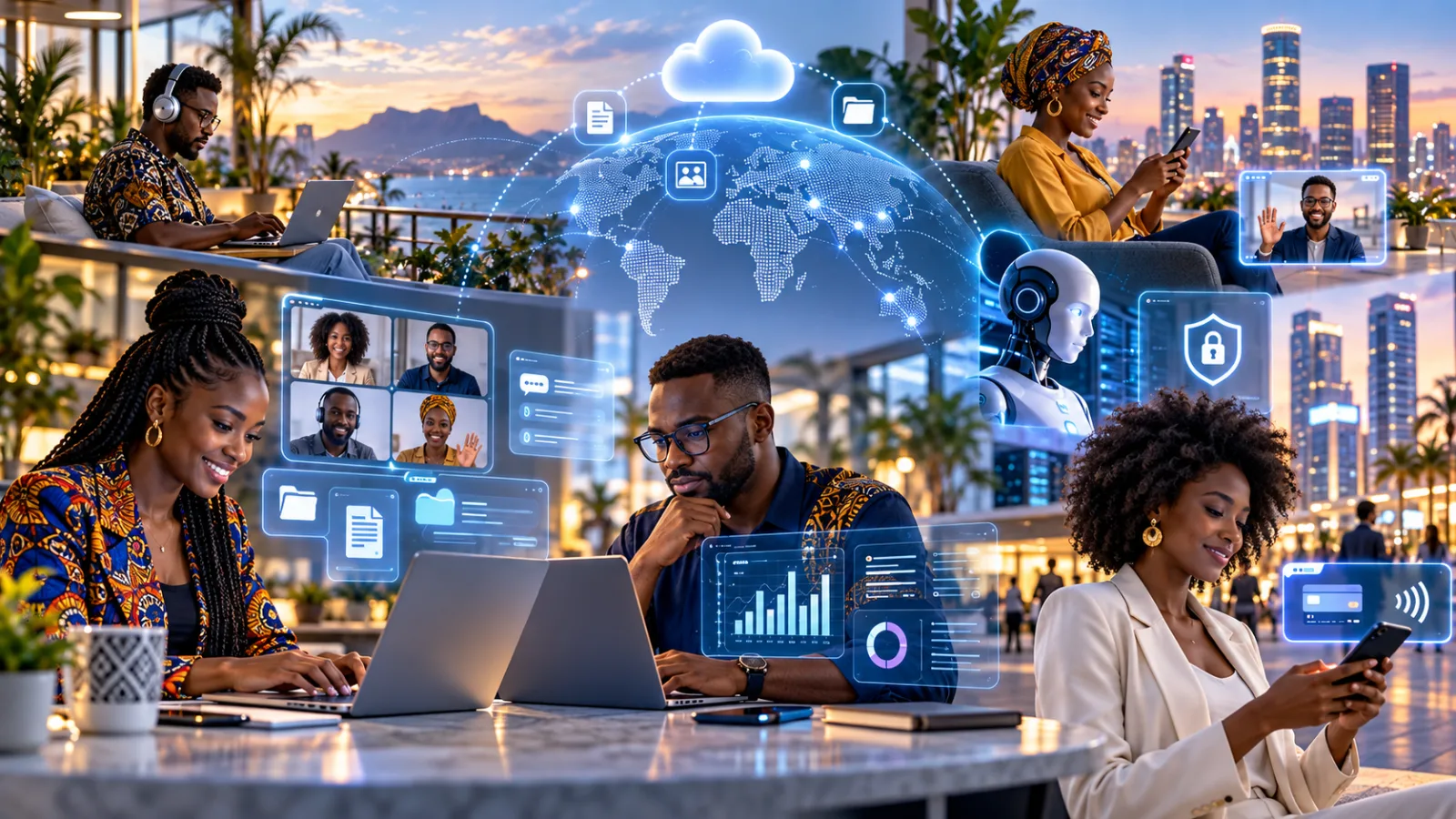
Technology is reshaping almost every part of modern life, from how we work and communicate to how we shop, learn and manage businesses. As digital tools become more powerful and accessible, individuals and organisations must learn how to use them effectively while adapting to new opportunities and challenges.
Make yourself comfortable.
Think about how many times you interact with technology before you leave home in the morning.
Your phone wakes you up.
You check a message.
You look at the weather.
You open your banking app.
You respond to an email.
Perhaps you request a ride, order breakfast or join a meeting—all from a device that fits inside your pocket.
Technology has become so deeply integrated into everyday life that many of its most significant changes no longer feel extraordinary.
Yet the transformation happening around us is enormous.
From small businesses using digital payments to companies managing international teams remotely, technology continues to reshape how we communicate, work, learn, shop and solve problems.
Communication Has Become Almost Instant
Not long ago, communicating with someone in another country could be expensive and inconvenient.
Today, families, businesses and colleagues can communicate almost instantly through messaging platforms, email, video calls and social media.
For businesses, this has completely changed customer service and collaboration.
A company in Accra can speak with a client in London, coordinate with a designer in Nairobi and receive payment from another market without everyone being physically present in the same location.
The result is a much more connected global economy.
But there is another side to constant connectivity.
Messages now reach us everywhere.
Work can easily follow people home.
Notifications compete continuously for attention.
The challenge going forward will not simply be becoming more connected. It will be learning when to disconnect.
Small Businesses Can Reach Bigger Markets
Technology has significantly lowered the barrier to entering many industries.
A small business no longer needs multiple physical branches before reaching customers across an entire country.
With the right digital presence, even a relatively small company can use:
Websites
E-commerce platforms
Social media
Digital advertising
Online payment systems
Delivery platforms
Customer relationship management tools
to operate beyond its immediate geographical area.
A talented fashion designer working from a small studio can showcase products internationally through social media.
A consultant can hold paid sessions online.
A restaurant can receive orders digitally.
A training company can sell courses to customers it may never meet physically.
This has created opportunities that previous generations of entrepreneurs simply did not have.
Artificial Intelligence Is Becoming Part of Everyday Business
Artificial intelligence is no longer something limited to research laboratories or futuristic movies.
Businesses are increasingly using intelligent software to assist with areas such as customer support, data analysis, fraud detection, forecasting, document processing, software development and productivity.
The important question for businesses is becoming less about whether technology will influence their industry and more about how they intend to use it responsibly and effectively.
Technology works best when it improves human decision-making rather than simply adding more software to an organisation.
Companies still need people who understand customers, strategy, communication and context.
Tools may become more capable, but judgement remains valuable.
The Workplace Is Becoming More Flexible
For many professionals, work is no longer tied completely to a physical office.
Cloud computing, project management software, video conferencing and digital collaboration platforms have made remote and hybrid working possible across many industries.
Companies can now recruit talent outside their immediate location.
Employees may have greater flexibility.
Teams can collaborate across different countries and time zones.
However, flexible working also requires stronger systems.
Organisations need clear processes for:
Communication
Cybersecurity
Access control
Performance management
Data protection
File management
Accountability
Simply allowing employees to work remotely does not automatically create an effective remote workplace.
The technology has to be supported by good management.
Education Is Moving Beyond the Traditional Classroom
Education has also changed dramatically.
Students can access lectures, tutorials, digital libraries and educational resources from almost anywhere.
Professionals can learn new skills without returning to university full-time.
Someone interested in programming, graphic design, accounting, marketing or entrepreneurship can begin learning online with relatively little equipment.
This does not mean physical classrooms will disappear.
Instead, education is becoming more flexible.
The future is likely to involve a combination of traditional learning, online resources, practical experience and continuous professional development.
For workers, this matters because skills that were valuable ten years ago may not be enough for the next ten.
Learning can no longer stop after graduation.
Healthcare Is Becoming More Digital
Technology is also changing the way healthcare services are delivered.
Electronic medical records, remote consultations, wearable devices and digital health platforms can make it easier to manage certain aspects of healthcare.
Patients can increasingly access information, communicate with healthcare providers and monitor selected health indicators digitally.
Technology does not replace doctors, nurses or other health professionals.
What it can do is improve access, organisation and communication when implemented responsibly.
Privacy, data security and accurate information remain especially important when technology is used in healthcare.
Digital Payments Are Transforming Commerce
One of the clearest examples of technology changing everyday life in many African markets is the growth of digital payments.
Mobile money, banking applications, QR payments, cards and online payment gateways have made it easier for businesses and customers to transact without relying entirely on cash.
For entrepreneurs, this can improve convenience and expand the number of ways customers can pay.
For customers, it can make purchasing faster and easier.
Digital financial systems are also helping connect commerce, transportation, retail and services in ways that would have been much more difficult just a few years ago.
Cybersecurity Is Becoming Everyone's Responsibility
As more activity moves online, cybersecurity becomes more important.
Large organisations are not the only targets.
Small businesses and individuals can also face:
Phishing attempts
Account takeovers
Malware
Payment fraud
Identity theft
Data breaches
Simple practices can make a meaningful difference.
Use strong passwords.
Enable multi-factor authentication where available.
Avoid suspicious links.
Keep devices and applications updated.
Limit unnecessary access to company systems.
Back up important information.
Technology creates opportunities, but those opportunities must be protected.
Technology Should Solve Problems
Businesses sometimes adopt technology because everyone else appears to be using it.
That is usually the wrong starting point.
Before purchasing another platform or implementing another system, organisations should ask:
What problem are we actually trying to solve?
Good technology should make something:
Faster
Easier
Safer
More accurate
More accessible
More efficient
More valuable to the customer
If a new system makes a simple process more complicated, the organisation may have digitised the problem rather than solved it.
The Future Belongs to People Who Can Adapt
Nobody knows exactly what technology will look like twenty years from now.
What we can say with confidence is that change will continue.
Some roles will evolve.
New careers will emerge.
Certain tasks will become automated.
New industries will develop around technologies that are still in their early stages today.
The people and businesses most prepared for that future will not necessarily be those who adopt every new tool first.
They will be the ones who remain curious, continue learning and understand how to apply technology to real human problems.
Because at its best, technology is not about replacing people.
It is about expanding what people are capable of doing.
Frequently Asked Questions
How is technology changing everyday life?
Technology is changing communication, banking, shopping, education, healthcare, entertainment, transportation and workplace collaboration.
How has technology changed business?
Businesses can reach larger markets, automate routine processes, accept digital payments, collaborate remotely and use data to improve decision-making.
What skills will become important in the future?
Digital literacy, communication, problem-solving, adaptability, data skills and the ability to work effectively with emerging technology are increasingly valuable.
What are the risks of increasing technology use?
Cybersecurity threats, privacy concerns, misinformation, digital inequality and overdependence on technology are among the challenges that need to be managed.
The question is no longer whether technology will change the world around us. It already has. The bigger question is how effectively we will use it.